The question

Does the thought of dying frighten you?

Originally asked

The Talks, to its interviewees, its interview series

The Talks asks this directly or through an equivalent risk-and-mortality formulation across interviews.

You answer as yourself. Nobody on FLAPSS answers as anybody else.

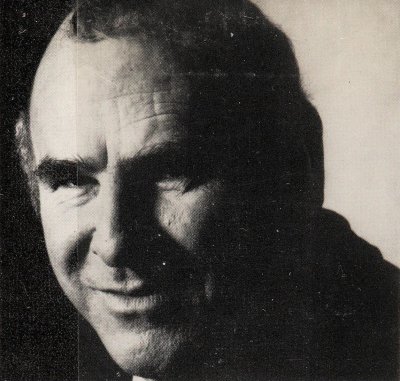
Clive James

Critic, essayist, poet and broadcaster

Recorded said elsewhere, not written here
But Larkin was different. He knew it would end in silence, and he was afraid of the silence. He didn’t like the idea of not being here. I’m not like that – and my death might come as a relief to quite a few people. I’d rather like it not to hurt, that’s all.

Rachel Cooke, The Observer, 1 December 2019 source ↗

Others on this question

View all 18 →
I don’t think so! You can’t really know that until the moment of your death, at which point you will probably not be afraid because you won’t be there. I have a very old friend who called me last year to say, “Okay I am done. I am not fighting this anymore. I am checking out. I am calling to say goodbye because I am not really conscious most of the time. I am cutting off the pain killers.” He seemed okay. That was not the moment of his death, but it was within two or three days.
Recorded The Talks, 8 February 2023 source ↗
Henry Marsh Neurosurgeon and writer
It was fear of suffering before dying, and of, you know, lingering on, being in a hospital bed. And I hate hospitals, always have done. I think they're horrible places, even though I spent most of my life working in them. No, it's really - death itself holds no fears for me at all, as far as - I love the famous 18th century philosopher David Hume, who on his deathbed was asked, aren't you terribly worried about what will happen after death? And he said, no, I'm no more worried about not existing after death than I'm worried about not existing before I was born. And that is my view about death. I don't believe in an afterlife. But I know, as a doctor, that dying can be very unpleasant.
Recorded Terry Gross, Fresh Air, NPR, 30 January 2023 source ↗
Christopher Hitchens Essayist, critic and journalist
The chief side effect of this pain is numbness in the extremities, filling me with the not irrational fear that I shall lose the ability to write. Without that ability, I feel sure in advance, my “will to live” would be hugely attenuated. I often grandly say that writing is not just my living and my livelihood but my very life, and it’s true. Almost like the threatened loss of my voice, which is currently being alleviated by some temporary injections into my vocal folds, I feel my personality and identity dissolving as I contemplate dead hands and the loss of the transmission belts that connect me to writing and thinking.
Recorded Vanity Fair, January 2012 source ↗
Roger Ebert Film critic
I know it is coming, and I do not fear it, because I believe there is nothing on the other side of death to fear. I hope to be spared as much pain as possible on the approach path. I was perfectly content before I was born, and I think of death as the same state. I am grateful for the gifts of intelligence, love, wonder and laughter. You can’t say it wasn’t interesting. My lifetime’s memories are what I have brought home from the trip. I will require them for eternity no more than that little souvenir of the Eiffel Tower I brought home from Paris.
Recorded Salon, excerpted from Life Itself: A Memoir, 15 September 2011 source ↗

More from Clive James

View profile →
Question What is the hardest thing that has happened to you, and what did you carry out of it? Failure & regret
One thing, it's too big a subject and I want to talk about it on paper if I talk about it at all. But I can say this much, because I thought the life that my father and mother would have had together was cut short and something of what they might have achieved I hope that I'm achieving in my work.
Recorded Philip Williams, 7.30, ABC, ABC News, 20 August 2015 source ↗
Question Has knowing you will die changed how you live? Death & what remains
Yeah. These books are all around me and they'll be here when I go and I'm that sick. I just don't know when it ends. But in 2010, I got really ill and leukaemia was one of the things I was diagnosed with and eventually it will switch me off. So it raises the question: what do you do? Do you lie down and give up? Read the Bible? Or do you go on as you were reading and writing. And I've done the second and I've just done a little bit called Latest Readings which is about the books I've been reading lately and I could do another volume of that because I'm still reading.
Recorded Philip Williams, 7.30, ABC, ABC News, 20 August 2015 source ↗
Question How would you want people to remember you? Death & what remains
It’s here. I’ve always thought that it was here. If you play to the gallery, that’s posterity. The best you can hope for is another gallery after you’ve gone, but you won’t see it. Statistically, it’s unlikely that much of what one does will be read for ever. It may just be one or two poems. For example, my Japanese Maple poem is famous among people who own a Japanese maple.
Recorded Robert McCrum, The Observer, 15 March 2015 source ↗

More on death & what remains

Also answered this

Terry Pratchett, Jenny Diski, Christopher Hitchens, Maurice Sendak, Tony Judt, Jimmy Carter

Search the directory for somebody in particular.

Explore further

Report this answer