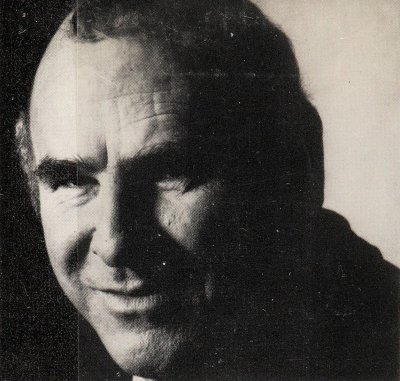
What is the hardest thing that has happened to you, and what did you carry out of it?
Recorded Clive James said elsewhere, not written here
One thing, it's too big a subject and I want to talk about it on paper if I talk about it at all. But I can say this much, because I thought the life that my father and mother would have had together was cut short and something of what they might have achieved I hope that I'm achieving in my work.

Philip Williams, 7.30, ABC, ABC News, 20 August 2015 source ↗

Others on this question

View all 36 →
Athol Fugard Playwright, director and actor
I don’t think I could. Of course I’m saying this on American soil. I’m facing a few more months of work in this city, but at the end of it, I will be returning to South Africa. I would like to believe that if for some reason the situation deteriorated to the point where I was told, “If you leave South Africa, you can never come back,” I’d stay there. There were periods in my life when I could have been seduced away. I am incredibly fortunate that the government took away my passport at the point when I was most open to seduction. With my passport gone, I could have left on a one-way ticket. But the issue was so starkly highlighted that I had no problem in saying, “No.”
Recorded Lloyd Richards, Interview conducted in front of an audience at the Poetry Center of the 92nd Street YMHA, New York, The Paris Review, Issue 111, Summer 1989, 13 October 1985 source ↗
Lynsey Addario Photojournalist and war photographer; Pulitzer Prize winner, 2009
So it affects my work in the sense that now I’ve been kidnapped twice. So now when I’m working in a place like Iraq — even if it’s northern Iraq and someone who hasn’t survived those two things would just drive on these roads and say, like, “Oh, this is great” — but of course, for me, all I see is ISIS around every corner. Or I envision the road filling up with insurgents because I’ve seen that, and I’ve been in that situation. So it affects my work in that sense, that I’m more paranoid than I ever was, certainly than I was in my 20s.
Recorded Academy of Achievement recorded interview, American Academy of Achievement, 21 October 2017 source ↗
Roger Ebert Film critic
Thank God I found sobriety. I could sustain myself with my work, my reading, the movies, my friends. And walking, walking, walking. Of all the purposes of education, I think the most useful is this: It prepares you to keep yourself entertained. It gives you a better chance of an interesting job. ... I can't remember the last time I felt bored. I can't eat, drink or talk, and yet I have so many other resources to keep myself entertained. I think I must be a case study.
Recorded Roger Ebert's Journal, rogerebert.com, 6 November 2010 source ↗
Suzanne Farrell Ballerina and ballet master; répétiteur for the Balanchine Trust
Well, I’ve had injuries, but I’d always get out on stage because I think the body is a wonderful thing, and you have to treat it with respect. We haven’t even reached our potential for what we can do as human beings. I went through a period where I had hip trouble. I thought it was just a typical pulled muscle, so I used liniment, and warmed up more than I thought was necessary, all the things we learn to do when you have a typical dance-related injury or sore muscle. Over the months, it didn’t go away. In fact, it got worse. Eventually I realized that I had a very serious problem, and it was the first time that dance had let me down. What had been my salvation and my security with my body was abandoning me. This was emotionally and physically devastating.
Recorded Academy of Achievement (achievement.org) source ↗

More from Clive James

View profile →
Question What would you like to be remembered for? Death & what remains
It’s here. I’ve always thought that it was here. If you play to the gallery, that’s posterity. The best you can hope for is another gallery after you’ve gone, but you won’t see it. Statistically, it’s unlikely that much of what one does will be read for ever. It may just be one or two poems. For example, my Japanese Maple poem is famous among people who own a Japanese maple.
Recorded Robert McCrum, The Observer, 15 March 2015 source ↗
Question Has knowing that you will die changed how you live? Death & what remains
Yeah. These books are all around me and they'll be here when I go and I'm that sick. I just don't know when it ends. But in 2010, I got really ill and leukaemia was one of the things I was diagnosed with and eventually it will switch me off. So it raises the question: what do you do? Do you lie down and give up? Read the Bible? Or do you go on as you were reading and writing. And I've done the second and I've just done a little bit called Latest Readings which is about the books I've been reading lately and I could do another volume of that because I'm still reading.
Recorded Philip Williams, 7.30, ABC, ABC News, 20 August 2015 source ↗

More on failure & regret

Also answered this

Christopher Hitchens, Suzan-Lori Parks, Maurice Sendak, Wole Soyinka, Tony Judt, Athol Fugard

Search the directory for somebody in particular.

Explore further

Report this answer