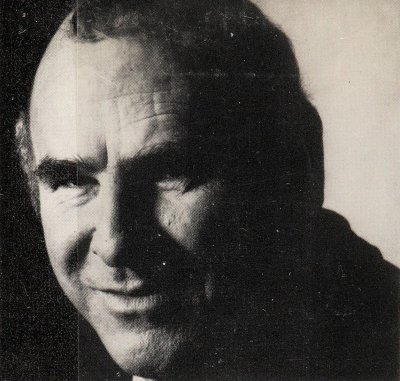
The hard part was getting around this, this was a religion among physicists, and in fact even in the Bohr-Einstein debates, and with Schrödinger also, the universal religion was quantum mechanics makes correct predictions, period, no, off the table. What Bell's theorem and in particular our version of it, the Clauser-Horne-Shimony-Holt experimental prediction, showed that either that had to be wrong, nor Einstein's whole legacy had to be wrong. I think at the time people who were critical of doing the experiment didn't realise really what was at stake, that it was that cut and dried between two religious icons, if you will, the field of physics. Since I kind of was the inventor of the CHSH inequality and the CH inequality and all that, I knew exactly what it was all about. But it took a long time for that to filter in.
Originally asked
The American Academy of Achievement, to its honourees, its oral-history interviews
The Academy of Achievement repeatedly asks honorees to identify a major professional obstacle or challenge and describe confronting it.
You answer as yourself. Nobody on FLAPSS answers as anybody else.
Robert McCrum, Interview at James's home in Cambridge, published in the Observer New Review, The Observer, 15 March 2015 source ↗
Others on this question
View all 38 →Sí, empezamos desde cero. Pedimos una licencia de financiamiento comercial, pero es difícil comenzar porque la banca se basa en confianza, regulación y escala. Hay barreras regulatorias que dificultan la entrada de nuevos jugadores. Es un sector históricamente cerrado, que favorece a los incumbentes. Aun así, logramos construir una marca fuerte y generar confianza en los consumidores.
Tony was cautious. He suspected I’d wired the radio telescope up wrong. So we checked on another radio telescope on the site. The thing was pulsing nicely on mine but as we stood by the pen recorder of this other telescope, nothing happened. It was a horrible moment. And suddenly there it was, five minutes later because we had miscalculated when the telescope would see it. If we’d miscalculated by 25 minutes, we’d have all gone home and the story would be different.
I was raised not to dream. I was told to live for others, so I don’t have many dreams, but I face countless obstacles and challenges. Arrogance, conflict, criticism, insults, inaction. At Toyota, there was so much rationalizing of why things couldn’t be done. As if doing nothing was the best option.
More from Clive James
View profile →Yes, but I don’t think I have the energy. I’ve been hit in the face by a cricket bat at 1,000 miles an hour. I think the last round-up is here. But that’s OK. It would be bad manners to complain. I’ve had a lucky life, and I’m grateful for it.
One thing, it's too big a subject and I want to talk about it on paper if I talk about it at all. But I can say this much, because I thought the life that my father and mother would have had together was cut short and something of what they might have achieved I hope that I'm achieving in my work.
But Larkin was different. He knew it would end in silence, and he was afraid of the silence. He didn’t like the idea of not being here. I’m not like that – and my death might come as a relief to quite a few people. I’d rather like it not to hurt, that’s all.
Yeah. These books are all around me and they'll be here when I go and I'm that sick. I just don't know when it ends. But in 2010, I got really ill and leukaemia was one of the things I was diagnosed with and eventually it will switch me off. So it raises the question: what do you do? Do you lie down and give up? Read the Bible? Or do you go on as you were reading and writing. And I've done the second and I've just done a little bit called Latest Readings which is about the books I've been reading lately and I could do another volume of that because I'm still reading.
I think I actually wrote it in one of my poems is that my decline has been the making of me - I forget how I put it. Yeah, simply more reflective. I haven't got the excuse of moving forward just on impulse anymore, which I did, I think, for a long, long time.
It’s here. I’ve always thought that it was here. If you play to the gallery, that’s posterity. The best you can hope for is another gallery after you’ve gone, but you won’t see it. Statistically, it’s unlikely that much of what one does will be read for ever. It may just be one or two poems. For example, my Japanese Maple poem is famous among people who own a Japanese maple.
More on craft & work
- What is the worst job you have done? 239 answers
- What do you consider your greatest achievement? 205 answers
- How does a new work begin for you? 85 answers
- What do you do when you feel creatively blocked or stuck? 80 answers
- How do you know when a piece of work is finished? 76 answers
- How much rewriting or revision do you do? 59 answers
Also answered this
Tony Judt, François Ozon, David Lynch, Christopher Hitchens, Mohamed ElBaradei, Ernst Mayr
Search the directory for somebody in particular.
Explore further
- All craft & work questions
- Explore the archive — by field, age, era, and subject