What have you come to understand about what it means to be human?

Originally asked

Krista Tippett, to her guests, On Being

Krista Tippett uses this as a recurring, sometimes-closing On Being question; the wording is intentionally adapted to each guest.

You answer as yourself. Nobody on FLAPSS answers as anybody else.

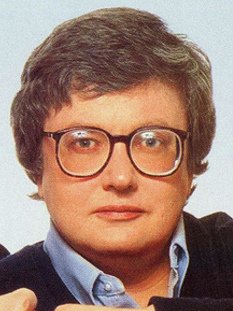
Recorded Roger Ebert said elsewhere, not written here
When I was a child the mailman came once a day. Now the mail arrives every moment. I used to believe it was preposterous that people could fall in love online. Now I see that all relationships are virtual, even those that take place in person. Whether we use our bodies or a keyboard, it all comes down to two minds crying out from their solitude.

Roger Ebert's Journal, rogerebert.com, 6 November 2010 source ↗

Others on this question

View all 21 →
Bill Clinton 42nd President of the United States, 1993–2001
There is always an impulse to degrade people who are different from you, to diminish them, to demean them, and it never seems to go away, even when there is ample evidence that when we work together, we do better. It’s not about material progress or personal comfort. It’s about personal identity, and there are still so many forces at work in the human psyche that lead some people to think that their identity requires them to have someone to look down on or to demean or to feel that they’re superior to, and I think that that’s at the root of all this. It’s the only story in human society. Who is the other? Who is one of yours? Cain and Abel.
Recorded Academy of Achievement interview source ↗
Tony Judt Historian and essayist
I was forced to think very hard about what it meant to be me, what it means to be a person who is only a brain. Pascal's 'thinking reed' really does capture it, because I'm just a bunch of dead muscles thinking.
Recorded Ed Pilkington, The Guardian, 8 January 2010 source ↗
Ram Dass Spiritual teacher and author
The stroke cut out a lot of my external trips: my sports car and golf and my cello. This [ points to hand ] is just not much use with a cello, and I was—forced inside, and finding myself living in my inside. And that has made me be part of my soul. And that's perceiving my incarnation from here [ points to heart ], rather than from here [ points to head ]. And since this is words, I start from here, go over there.
Recorded Ross Simonini, The Believer, issue 115, by Skype from Hawaii, 20 November 2017 source ↗
Steve Jobs Co-founder and chief executive of Apple; co-founder of NeXT; chief executive of Pixar
The problem is I'm older now, I'm 40 years old, and this stuff doesn't change the world. It really doesn't. That's going to break people's hearts. I'm sorry, it's true. Having children really changes your view on these things. We're born, we live for a brief instant, and we die.
Recorded Gary Wolf, Wired 4.02, February 1996 source ↗

More from Roger Ebert

View profile →
Question What is the most important lesson life has taught you? Time & hindsight
I believe that if, at the end, according to our abilities, we have done something to make others a little happier, and something to make ourselves a little happier, that is about the best we can do. To make others less happy is a crime. To make ourselves unhappy is where all crime starts. We must try to contribute joy to the world. That is true no matter what our problems, our health, our circumstances. We must try. I didn’t always know this and am happy I lived long enough to find it out.
Recorded Salon, excerpted from Life Itself: A Memoir, 15 September 2011 source ↗
Question What is your greatest fear? Identity & self
Many readers have informed me that it is a tragic and dreary business to go into death without faith. I don’t feel that way. “Faith” is neutral. All depends on what is believed in. I have no desire to live forever. The concept frightens me. I am 69, have had cancer, will die sooner than most of those reading this. That is in the nature of things.
Recorded Excerpt from Life Itself: A Memoir, published by Salon, 15 September 2011 source ↗
Question What happens when we die? Death & what remains
What I expect to happen is that my body will fail, my mind will cease to function and that will be that. My genes will not live on, because I have had no children. I am comforted by Richard Dawkins’ theory of memes. Those are mental units: thoughts, ideas, gestures, notions, songs, beliefs, rhymes, ideals, teachings, sayings, phrases, clichés that move from mind to mind as genes move from body to body. After a lifetime of writing, teaching, broadcasting and telling too many jokes, I will leave behind more memes than many. They will all also eventually die, but so it goes.
Recorded Salon, excerpted from Life Itself: A Memoir, 15 September 2011 source ↗
Question What would you like to leave your children? Death & what remains
What I expect to happen is that my body will fail, my mind will cease to function and that will be that. My genes will not live on, because I have had no children. I am comforted by Richard Dawkins’ theory of memes. Those are mental units: thoughts, ideas, gestures, notions, songs, beliefs, rhymes, ideals, teachings, sayings, phrases, clichés that move from mind to mind as genes move from body to body. After a lifetime of writing, teaching, broadcasting and telling too many jokes, I will leave behind more memes than many. They will all also eventually die, but so it goes.
Recorded Excerpt from Life Itself: A Memoir, published by Salon, 15 September 2011 source ↗
Question What is the hardest thing that has happened to you, and what did you carry out of it? Failure & regret
Thank God I found sobriety. I could sustain myself with my work, my reading, the movies, my friends. And walking, walking, walking. Of all the purposes of education, I think the most useful is this: It prepares you to keep yourself entertained. It gives you a better chance of an interesting job. ... I can't remember the last time I felt bored. I can't eat, drink or talk, and yet I have so many other resources to keep myself entertained. I think I must be a case study.
Recorded Roger Ebert's Journal, rogerebert.com, 6 November 2010 source ↗
Question How close have you come to death? Death & what remains
One of these days I will encounter what Henry James called on his deathbed “the distinguished thing.” I will not be conscious of the moment of passing. In this life I have already been declared dead. It wasn’t so bad. After the first ruptured artery, the doctors thought I was finished. My wife, Chaz, said she sensed that I was still alive and was communicating to her that I wasn’t finished yet. She said our hearts were beating in unison, although my heartbeat couldn’t be discovered. She told the doctors I was alive, they did what doctors do, and here I am, alive.
Recorded Salon, excerpted from Life Itself: A Memoir, 15 September 2011 source ↗

More on values & belief

Also answered this

David Lynch, Tony Judt, Paul Kalanithi, Leon Panetta, Mellody Hobson, Steve Jobs

Search the directory for somebody in particular.

Explore further

Report this answer