The question

What lesson has mattered most in your life?

Originally asked

The Guardian, to a different person each week, The Q&A

Verbatim recurring item in The Guardian Q&A; two fully readable publisher-hosted respondent pages establish institutional recurrence.

You answer as yourself. Nobody on FLAPSS answers as anybody else.

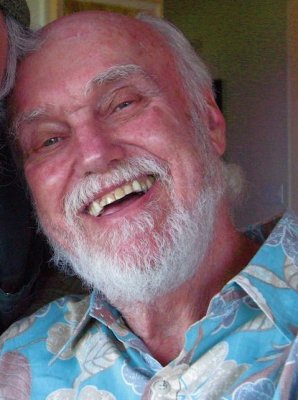
Ram Dass

Spiritual teacher and author

Recorded said elsewhere, not written here
Well, I—I've experienced that the stroke was grace. It was grace, for me, to play, to get inside, grace. I was dependent. These are things that I—those, those were graceful things. You know, pushed. And just go inside, to be—you're a quote "author" and it's a cultural thing, that role, to get into your head. But it's a head game. It's a head game. And I wanted to get down to my spiritual identity. And the stroke placed me at the spiritual identity.

Ross Simonini, The Believer, issue 115, by Skype from Hawaii, 20 November 2017 source ↗

Others on this question

View all 138 →
Sofia Coppola American filmmaker and actress
To follow your path and not worry about what to do too much; one thing leads to the next, and you wind up where you’re meant to be.
Recorded The Guardian, The Q&A, The Guardian, 18 March 2023 source ↗
Christiane Nüsslein-Volhard Developmental biologist; Nobel laureate in Physiology or Medicine, 1995
Not really. I thought that getting the Nobel Prize was a big interruption in my career, I thought and it was very distracting. It takes a lot of time you know, it just takes time to be honoured, you have to travel and you have to give speeches of things you have, oh it’s so often that you get bored to tears when you hear your own voice. And it’s really taking a lot of your time and there’s no way that during this time you can start something new, I mean you just profit from what you’ve done and there is no time to develop new ideas.
Recorded Marika Griehsel, Interview at the 53rd Lindau Nobel Laureate Meeting, 30 June–4 July 2003, Nobel Prize Outreach, 1 July 2003 source ↗
Tony Judt Historian and essayist
I think the only life experience that I have to offer out of this is something we all know in the abstract but don't experience in practice very much. That is that you can survive an awful lot of bad stuff, so long as your mind is intact. I'm afraid that's the only life experience I have to offer.
Recorded Terry Gross, Fresh Air, NPR, 29 March 2010 source ↗

More from Ram Dass

View profile →
Question What has life taught you about being human? Values & belief
The stroke cut out a lot of my external trips: my sports car and golf and my cello. This [ points to hand ] is just not much use with a cello, and I was—forced inside, and finding myself living in my inside. And that has made me be part of my soul. And that's perceiving my incarnation from here [ points to heart ], rather than from here [ points to head ]. And since this is words, I start from here, go over there.
Recorded Ross Simonini, The Believer, issue 115, by Skype from Hawaii, 20 November 2017 source ↗
Question What is the hardest thing that has happened to you, and what did you carry out of it? Failure & regret
everyone saw me as a victim of a terrible illness. But what happened to my body was far less frightening than what happened to my soul. The stroke wiped out my faith. It took me so far from my guru that I felt my oxygen cord had been cut. ... I couldn't put the two together. Then I thought, maybe the stroke is a form of grace, and I hunted for that: how could the stroke be seen as grace? ... The stroke was giving me lessons, advanced lessons. ... It brought me into my soul, and that's grace.
Recorded Sara Davidson, Keynote talk at a conference on body and soul, Hyatt Regency, San Francisco, reported in the New York Times Magazine, The New York Times Magazine, 21 May 2000 source ↗

More on time & hindsight

Also answered this

Clive James, Richard Coles, Maggie O'Farrell, Tony Judt, Maurice Sendak, Christopher Hitchens

Search the directory for somebody in particular.

Explore further

Report this answer