What does the first sixty minutes of your day look like?
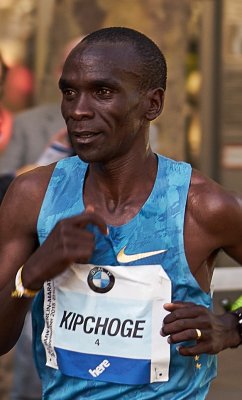
Recorded Eliud Kipchoge said elsewhere, not written here
Our life here is simple, very simple. Get up in the morning, go for a run, come back. If it is a day for cleaning, we do the cleaning, or we just relax. Then go for lunch, massage, the 4 o'clock run, evening tea, relax, go to sleep. As simple as that.

Global Sports Communication training camp, Kaptagat, Kenya, BBC Sport, 24 April 2020 source ↗

Others on this question

View all 20 →
Cheryl Strayed Author of Wild and Tiny Beautiful Things
I have two kids, so once we get them off to school, I tool around on email and Facebook longer than I should. Then I shut those things down and get to work.
Recorded Tina Essmaker, The Great Discontent, 10 July 2012 source ↗
Will Self Novelist, essayist and journalist
When I’m working on a novel I type the initial draft first thing in the morning. Really: first thing. For preference, I have a cigarette ready-rolled and a coffee percolator loaded the night before; then I simply roll out of bed, fuel up and set to it. I believe the dreaming and imagining faculties are closely related, such that wreathed in night-time visions I find it possible to suspend disbelief in the very act of making stuff up.
Recorded The Guardian, 'My writing day' series, 18 June 2016 source ↗
Haruki Murakami Novelist, short-story writer and translator
When I’m in writing mode for a novel, I get up at four a.m. and work for five to six hours. In the afternoon, I run for ten kilometers or swim for fifteen hundred meters (or do both), then I read a bit and listen to some music. I go to bed at nine p.m. I keep to this routine every day without variation. The repetition itself becomes the important thing; it’s a form of mesmerism. I mesmerize myself to reach a deeper state of mind. But to hold to such repetition for so long—six months to a year—requires a good amount of mental and physical strength. In that sense, writing a long novel is like survival training. Physical strength is as necessary as artistic sensitivity.
Recorded John Wray, The Paris Review, issue 170, Summer 2004, 1 January 2004 source ↗
Nick Cave Songwriter, musician and novelist
As many of you know, I observe specific protocols to open the creative mind – I sit at a desk in my office and write, working exclusively between 9am and 5pm. Within ‘office hours’ I find my mind becomes genuinely free, and I feel a creativity that is qualitatively richer than anything I may experience outside of this time, in the disorder and distraction of the ordinary world. For me, what must appear to some as forced labour is where all the imaginative mischief, beauty, and love are free to happen. Freedom finds itself in captivity.
Recorded Jai, The Red Hand Files, Issue #302, 28 October 2024 source ↗

More from Eliud Kipchoge

View profile →
Question What is the thing you are best at that nobody watching can see? Craft & work
When I have a lot of pain, I try to confuse my mind to forget about the pain and think about the distance. I don't want pain to be in my mind, because I'd really lose focus on running. After winning, you won't have that pain, but it comes later. The marathon is hard; the second day, you don't go up or down stairs.
Recorded Address and Q&A at the Oxford Union Society, November 2017, Outside, 10 February 2018 source ↗

More on daily life

Also answered this

Haile Gebrselassie, Ellie Simmonds, Magnus Carlsen, David Lynch, David Hare, Hilary Mantel

Search the directory for somebody in particular.

Explore further

Report this answer