I myself, as I’m writing, don’t know who did it. The readers and I are on the same ground. When I start to write a story, I don’t know the conclusion at all and I don’t know what’s going to happen next. If there is a murder case as the first thing, I don’t know who the killer is. I write the book because I would like to find out. If I know who the killer is, there’s no purpose to writing the story.
What is the part of your job that people would be surprised is most of your job?
Question
What inspires you to learn?
Attention & the world
Question
What have you come to understand about what it means to be human?
Values & belief
Question
What did you want to be when you were growing up?
Identity & self
Question
What do you consider your greatest achievement?
Craft & work
Question
What is the worst thing anyone has said to you?
Failure & regret
Question
When was the last time you changed your mind about something?
Change of mind
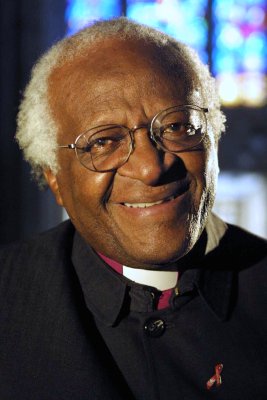
What is rewarding about the priesthood is, one, that you have an incredible privilege of being privy to some of the most extraordinary things about people. I mean, as their parish priest, you visit people who are sick, say, on their death bed and they tell you things that they probably have not shared with any other person. You are privileged to bring the Holy Sacrament to people at a time when they are probably at their lowest. But you also have the privilege of meeting up with people at their moment of great joy, when they are getting married, or when they have a child baptized.
Academy of Achievement recorded interview, American Academy of Achievement, 12 June 2004 source ↗
Others on this question
View all 47 →
Haruki Murakami
Novelist, short-story writer and translator
Suzan-Lori Parks
Playwright, screenwriter and novelist; Pulitzer Prize for Drama, 2002
Right. And let’s put Michelangelo in quotes, ’cause was he really the one who actually said that? But, anyway, the idea still holds. I feel that whatever I’m writing exists already. Maybe that’s because of a glitch in the space-time continuum and when I write I’m actually putting my living self behind the present moment in time. Like I’m following something through the woods. Eyes open. Ears open. Heart open. And I’m following a path that is sometimes behind me.
Warren Buffett
Chairman and chief executive of Berkshire Hathaway, 1970–2025
The extraordinary delegation of authority now existing at Berkshire is the ideal antidote to bureaucracy. In an operating sense, Berkshire is not a giant company but rather a collection of large companies. At headquarters, we have never had a committee nor have we ever required our subsidiaries to submit budgets (though many use them as an important internal tool). We don't have a legal office nor departments that other companies take for granted: human relations, public relations, investor relations, strategy, acquisitions, you name it. We do, of course, have an active audit function; no sense being a damned fool.
Recorded
Berkshire Hathaway annual shareholder letter, Berkshire Hathaway Inc., 27 February 2015
source ↗
Nick Cave
Songwriter, musician and novelist
The artistic process seems to be mythologized quite a lot into something far greater than it actually is. It is just hard labor. […] As anyone who actually writes knows, if you sit down and are prepared, then the ideas come. There’s a lot of different ways people explain that, but, you know, I find that if I sit down and I prepare myself, generally things get done.
More from Desmond Tutu
View profile →Ultimately, it’s a man who was teaching us English Literature in what we call matricula, the last 2 years of high school. He really was quite extraordinary. When he spoke of a Shakespearean play, you almost thought that he grew up with Shakespeare! He was very good, yes. A black guy who was fantastic and gave us a deep love for literature.
I have come to realize the extraordinary capacity for evil that all of us have because we have now heard the Truth and Reconciliation Commission, and there have been revelations of horrendous atrocities that people have committed. Any and every one of us could have perpetrated those atrocities. The people who were perpetrators of the most gruesome things didn’t have horns, didn’t have tails. They were ordinary human beings like you and me. That’s the one thing. Devastating! But the other, more exhilarating than anything that I have ever experienced — and something I hadn’t expected — to discover that we have an extraordinary capacity for good. People who suffered untold misery, people who should have been riddled with bitterness, resentment and anger come to the Commission and exhibit an extraordinary magnanimity and nobility of spirit in their willingness to forgive, and to say, “Hah! Human beings actually are fundamentally good.” Human beings are fundamentally good. The aberration, in fact, is the evil one, for God created us ultimately for God, for goodness, for laughter, for joy, for compassion, for caring.
I know that for a very long time my consuming passion, which was confirmed when I contracted TB — I had TB when I was about 12 or so — was I wanted to be a physician and when I got TB I was even more determined. I want to be physician so that I can find a cure for the scourge. And, in fact, I was admitted to medical school. If we had had the funds maybe today I would have been a physician.
One moment, Nelson Mandela is in jail, and the next moment, he is walking, a free man. One moment, we are shackled as the oppressed of apartheid; the next, we are voting for the very first time. I was 63 when I voted for the first time in my life in the country of my birth. Nelson Mandela was 76 years of age. But it happened, it happened. It happened partly because the international community supported us. People prayed for us. People demonstrated on our behalf, especially young people. Students at universities and college campuses used to sit out in the baking sunshine to force their institutions to divest and the miracle happened. We became free because we were helped and we want to say a big “thank you” to the world. And, you can become free nonviolently.
There will always be so many who might say, “Ah, he’s a politician masquerading as an archbishop.” Politics is so all-pervasive, and in my theology, obviously, all of life belongs to God, and you don’t have compartments, this is your economic life, this is your political life, this is your religious life. Religion encompasses all of those. But yes, I wouldn’t myself have said I was setting out to be a political animal.
I used to be “Mister Disinvestment.” Now I would like to be Mister Investment and say, “Come! Come and be part of an exciting, exhilarating process. Come in! Come in on the ground floor and see a people do something that’s probably never happened before, people seeking to become something radically different from what their antecedents would have made us believe they were likely to become.
More on craft & work
- What is the worst job you have done? 232 answers
- What do you consider your greatest achievement? 193 answers
- How does a new work begin for you? 70 answers
- How do you know when a piece of work is finished? 69 answers
- What do you do when you feel creatively blocked or stuck? 69 answers
- How much rewriting or revision do you do? 51 answers
Also answered this
Barbara Jordan, Lynsey Addario, Barack Obama, Nicholas Kristof, Lee Kuan Yew, Steve Jobs
Search the directory for somebody in particular.
Explore further
- All craft & work questions
- Explore the archive — by field, age, era, and subject