What are you unwilling to optimise?
Recorded Oliver Sacks said elsewhere, not written here
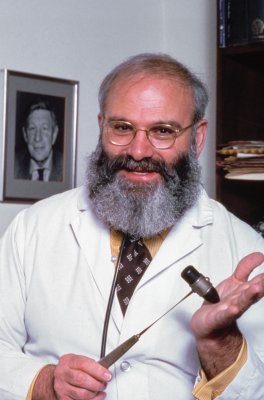
I’ve had this concern all the time, but I can only hope that if one writes with appreciation and delicacy and respect, then it’s okay. I have to say that I’ve written a hundred times as much as I’ve published, because if there’s any thought of offense or embarrassment, then I will put the thing quietly away.

Academy of Achievement recorded interview, American Academy of Achievement, 17 June 2000 source ↗

Others on this question

View all 30 →
Bong Joon-ho Film director and screenwriter
There were times when I thought I wanted to be a cartoonist. If I weren’t a film director, I think cartoons would have been a good alternative. But I never properly studied drawing, so my drawings are strange. But when I’m prepping films, it’s good preparation — and comforting to me — to do the storyboards. It’s fun, too, like drawing a whole comic.
Recorded Polygon, Polygon interview, October 2019, 14 October 2019 source ↗
Edmund Hillary Mountaineer and explorer; first ascent of Everest, 1953
I still regard adventure pretty much as a hobby to tell you the honest truth, and I think this approach to it keeps one refreshed almost. I think if you just regard adventure as a business, working becomes very boring as many other businesses can become. But even though adventure changed my life considerably, both in what I was doing and even economically, I’ve always regarded myself in a sense as a competent amateur.
Recorded Academy of Achievement interview source ↗
Mario Molina Atmospheric chemist; Nobel laureate in Chemistry, 1995
It’s easy to try to exaggerate the problems just to get more attention. So for me, it was very clear that the best way to deal with that was to do the best science that I was capable of doing.
Recorded Academy of Achievement interview, Sun Valley, Idaho, 29 June 1996 source ↗
Charlie Munger Vice chairman of Berkshire Hathaway, 1978–2023
The highest form that civilization can reach is a seamless web of deserved trust. Not much procedure, just totally reliable people correctly trusting one another. That's the way an operating room works at the Mayo Clinic. If a bunch of lawyers were to introduce a lot of process, the patients would all die. So never forget, when you're a lawyer, that you may be rewarded for selling this stuff, but you don't have to buy it. In your own life, what you want is a seamless web of deserved trust. And if your proposed marriage contract has forty-seven pages, my suggestion is you not enter.
Recorded USC Gould School of Law commencement, Speakola, 2007 source ↗

More from Oliver Sacks

View profile →
Question Has knowing that you will die changed how you live? Death & what remains
I feel a sudden clear focus and perspective. There is no time for anything inessential. I must focus on myself, my work and my friends. I shall no longer look at “NewsHour” every night. I shall no longer pay any attention to politics or arguments about global warming. This is not indifference but detachment — I still care deeply about the Middle East, about global warming, about growing inequality, but these are no longer my business; they belong to the future. I rejoice when I meet gifted young people — even the one who biopsied and diagnosed my metastases. I feel the future is in good hands.
Recorded The New York Times, Op-Ed, 19 February 2015 source ↗
Question What have you come to understand about what it means to be human? Values & belief
My generation is on the way out, and each death I have felt as an abruption, a tearing away of part of myself. There will be no one like us when we are gone, but then there is no one like anyone else, ever. When people die, they cannot be replaced. They leave holes that cannot be filled, for it is the fate — the genetic and neural fate — of every human being to be a unique individual, to find his own path, to live his own life, to die his own death.
Recorded The New York Times, Op-Ed, 19 February 2015 source ↗
Question What is the most important lesson life has taught you? Time & hindsight
And now, weak, short of breath, my once-firm muscles melted away by cancer, I find my thoughts, increasingly, not on the supernatural or spiritual, but on what is meant by living a good and worthwhile life — achieving a sense of peace within oneself. I find my thoughts drifting to the Sabbath, the day of rest, the seventh day of the week, and perhaps the seventh day of one’s life as well, when one can feel that one’s work is done, and one may, in good conscience, rest.
Recorded The New York Times, Sunday Review, 14 August 2015 source ↗
Question What is the hardest thing that has happened to you, and what did you carry out of it? Failure & regret
And I spent four years at a boarding school in the country, probably a rather abusive boarding school, and seeing very little of my parents, and that was a very bad time for me. A bad and almost a mad time. ... I think that some sort of trust, and ability for closeness, may have been compromised. And I think I’ve perhaps, to some extent, sort of kept a distance since that time, although this is not a distance I feel with my patients or my students.
Recorded Academy of Achievement recorded interview, American Academy of Achievement, 17 June 2000 source ↗
Question How would you like to die? Death & what remains
It was this celestial splendor that suddenly made me realize how little time, how little life, I had left. My sense of the heavens’ beauty, of eternity, was inseparably mixed for me with a sense of transience — and death. ... I told my friends Kate and Allen, “I would like to see such a sky again when I am dying.” “We’ll wheel you outside,” they said.
Recorded The New York Times, Sunday Review, 24 July 2015 source ↗

More on values & belief

Also answered this

Richard Hamming, Anthony Fauci, Christiane Nüsslein-Volhard, Mario Molina, Wole Soyinka, Edmund Hillary

Search the directory for somebody in particular.

Explore further

Report this answer