The question

Do you rely more on inspiration or discipline to make your work?

Originally asked

The Creative Independent, to working artists, its interview series

A repeated Creative Independent tension, asked as inspiration, muse, discipline, ritual, or the requirement to show up.

You answer as yourself. Nobody on FLAPSS answers as anybody else.

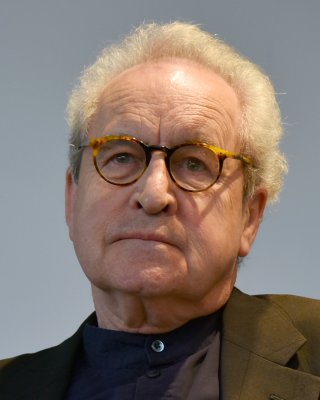
John Banville

Novelist; winner of the Booker Prize, 2005

Recorded said elsewhere, not written here
I keep office hours. I work from 9:30 to 6:00. It’s curious. In the morning, I could just about tie my shoelaces before noon, but I can write. It’s obviously a different part of my brain that’s working.

Academy of Achievement interview, London, England, 18 October 2017 source ↗

Others on this question

View all 27 →
It's just, I would say, faith. I had very clear visions of me being a champion. When I saw this picture of Reg Park on a cover, standing there like - as Hercules, from the Hercules movies, I looked at that, and then I looked at the inside and I read the story, and I immediately started creating visions of me standing there on the pedestal at the Mr. Universe contest and me being Hercules and me doing movies and so on. And that created such unbelievable drive and such unbelievable will and discipline, that there was absolutely no stopping me. I mean, I went to the gym two hours every day lifting weights. When I came home afterwards, I lifted an extra hour and a half and did bodybuilding training, and it was just relentless.
Recorded David Greene, Talk of the Nation, NPR, 2 October 2012 source ↗
Carlos Fuentes Novelist and essayist; Mexico's ambassador to France
A writer is no different than a bricklayer or a bus driver in that sense. You must have discipline. Oscar Wilde said that writing is 10 percent genius, 90 percent discipline. You must have discipline for writing. It is not an easy task. It is very lonely. You’re all alone. You are not in company. You are not enjoying yourself in that sense. You are enjoying yourself in another sense. You are delving into your depths, but you are profoundly lonely. It is one of the loneliest careers in the world. In the theater, you are with companions, with directors, actors. In film. In an office. In writing, you are alone. That takes a lot of strength and a lot of will to do it. You must really be in love with what you’re doing to tolerate the huge loneliness of writing.
Recorded Academy of Achievement interview, Los Angeles, California, 2 June 2006 source ↗
Esperanza Spalding Bassist, singer and composer
I don’t remember which writer said this, but in an interview, a prolific novelist was asked, “Do you write only when you’re inspired, or do you write all the time? Do you wait for the muse, or do you just kind of knock it out? You can just sort of spin it out?” And he said, “Well, I do wait for the muse. I write when the muse comes, but fortunately she shows up, like me, every day at 9:00 a.m.
Recorded Academy of Achievement interview, San Francisco, California, 13 September 2014 source ↗
Stephen Jay Gould, Ph.D. Palaeontologist and evolutionary biologist; essayist
I think it’s very different in what I do. Edison’s work was so much tinkering and trying it out and empirical testing. So much of my work is writing. I don’t know what you call the writing, it’s true that the actual inspiration, say for writing an essay, the outlining of it is probably a 15-minute to half-hour procedure, then you may spend about 20 hours writing it. But the writing isn’t perspiration in the same sense. It’s not inspiration, but it’s something in between. Any profession has a vast amount of tedium attached to it. There’s no sense not admitting it. If you’re passionate about it, tedium can be — not exactly a joy — but can be perfectly tolerable. The tedium of a pianist is 10 hours of practice a day or whatever, not all of which is inspirational. The tedium of an experimental scientist is calibrating the machines and doing it over and over again. The tedium of a paleontologist is poring over a microscope, or using a dental pick to chip away the sand grains from the fossil, or looking at the statistical figures in the columns of a computer printout. Every profession has massive tedium, that’s certainly true. You cannot be a successful professional (without it). But I think if you’re committed to it, as they say, it goes with the territory. It’s part of the work.
Recorded Academy of Achievement interview, Cambridge, Massachusetts, 28 June 1991 source ↗

More from John Banville

View profile →
Question How does a new piece of work usually begin for you? Craft & work
I think it begins as a kind of tension in space.  There’s something out there and it’s waiting for the big bang, and I have to get that into my head.  I have a composer friend in Ireland, and he beautifully said, “I have this scream in my head and I have to get it into the orchestra.  I have to get it into the music.”  But I wouldn’t be quite as dramatic as that.  But I have this tension.  I have this thing that has to be done. And the problem is, you see, once you’ve got the first paragraph down and you’ve got the tone, then the bloody book is written.  All you have to do is fill it in then, which makes it really boring.  I mean I’d like to be like one of those Japanese artists, you know, just go shoop ! and it’s done.  But no, it takes years.
Recorded Academy of Achievement interview, 2017 source ↗

More on craft & work

Also answered this

John Updike, Jonathan Lethem, Louise Glück, Athol Fugard, László Krasznahorkai, Gore Vidal

Search the directory for somebody in particular.

Explore further

Report this answer