How would you like to die?

Originally asked

Vanity Fair, to its interview subject, The Proust Questionnaire

A fixed final question in Vanity Fair's Proust Questionnaire, repeated verbatim across respondent pages.

You answer as yourself. Nobody on FLAPSS answers as anybody else.

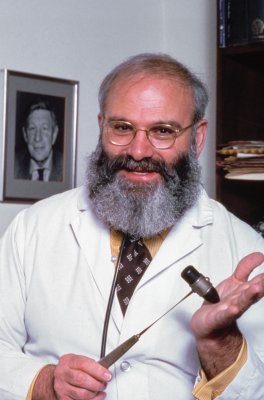
Recorded Oliver Sacks said elsewhere, not written here
It was this celestial splendor that suddenly made me realize how little time, how little life, I had left. My sense of the heavens’ beauty, of eternity, was inseparably mixed for me with a sense of transience — and death. ... I told my friends Kate and Allen, “I would like to see such a sky again when I am dying.” “We’ll wheel you outside,” they said.

The New York Times, Sunday Review, 24 July 2015 source ↗

Others on this question

View all 44 →
George Saunders Short-story writer and novelist
Read incorrectly, that sounds like a threat. No thanks, Vanity Fair !
Recorded Vanity Fair, The Proust Questionnaire, Vanity Fair, 25 January 2023 source ↗
Rita Moreno Actor, singer and dancer
With a malicious grin that implies I know something you don’t.
Recorded Vanity Fair, The Proust Questionnaire, Vanity Fair, 7 January 2022 source ↗
Julie Taymor Theatre and film director
When I am ready. When I have had enough. When I can no longer give anything. When I can no longer appreciate the small beauties. Without pain or remorse.
Recorded Vanity Fair, The Proust Questionnaire, Vanity Fair, 28 October 2022 source ↗
Lily Tomlin Comedian and actor
In my sleep, “dreaming android dreams of electric sheep.”
Recorded Vanity Fair, The Proust Questionnaire, Vanity Fair, 10 June 2022 source ↗

More from Oliver Sacks

View profile →
Question Are you afraid of death? Death & what remains
I cannot pretend I am without fear. But my predominant feeling is one of gratitude. I have loved and been loved; I have been given much and I have given something in return; I have read and traveled and thought and written. I have had an intercourse with the world, the special intercourse of writers and readers. Above all, I have been a sentient being, a thinking animal, on this beautiful planet, and that in itself has been an enormous privilege and adventure.
Recorded The New York Times, Op-Ed, 19 February 2015 source ↗
Question What are you still hoping to finish? Death & what remains
On the contrary, I feel intensely alive, and I want and hope in the time that remains to deepen my friendships, to say farewell to those I love, to write more, to travel if I have the strength, to achieve new levels of understanding and insight. This will involve audacity, clarity and plain speaking; trying to straighten my accounts with the world. But there will be time, too, for some fun (and even some silliness, as well).
Recorded The New York Times, Op-Ed, 19 February 2015 source ↗
Question Which book changed the way you think, and what did it change? Taste & recommendation
The first biography I read — I think the first scientific biography — was Madame Curie . And my mother, who was a surgeon, worked at the Marie Curie Hospital. She’d met Marie Curie, who was one of her great heroines. And reading the book, I think, was the first portrait of a scientist and the romance of a scientific life.
Recorded Academy of Achievement recorded interview, American Academy of Achievement, 17 June 2000 source ↗
Question What are you unwilling to optimise? Values & belief
I’ve had this concern all the time, but I can only hope that if one writes with appreciation and delicacy and respect, then it’s okay. I have to say that I’ve written a hundred times as much as I’ve published, because if there’s any thought of offense or embarrassment, then I will put the thing quietly away.
Recorded Academy of Achievement recorded interview, American Academy of Achievement, 17 June 2000 source ↗
Question What is the hardest thing that has happened to you, and what did you carry out of it? Failure & regret
And I spent four years at a boarding school in the country, probably a rather abusive boarding school, and seeing very little of my parents, and that was a very bad time for me. A bad and almost a mad time. ... I think that some sort of trust, and ability for closeness, may have been compromised. And I think I’ve perhaps, to some extent, sort of kept a distance since that time, although this is not a distance I feel with my patients or my students.
Recorded Academy of Achievement recorded interview, American Academy of Achievement, 17 June 2000 source ↗
Question Has knowing that you will die changed how you live? Death & what remains
I feel a sudden clear focus and perspective. There is no time for anything inessential. I must focus on myself, my work and my friends. I shall no longer look at “NewsHour” every night. I shall no longer pay any attention to politics or arguments about global warming. This is not indifference but detachment — I still care deeply about the Middle East, about global warming, about growing inequality, but these are no longer my business; they belong to the future. I rejoice when I meet gifted young people — even the one who biopsied and diagnosed my metastases. I feel the future is in good hands.
Recorded The New York Times, Op-Ed, 19 February 2015 source ↗

More on death & what remains

Also answered this

Henry Marsh, Joan Rivers, Diane Keaton, Ina Garten, Alice Waters, Christopher Hitchens

Search the directory for somebody in particular.

Explore further

Report this answer