What problem are you still trying to solve?

Originally asked

Lifehacker, to people about their working day, How I Work

Lifehacker repeatedly used this exact closing prompt in its named How I Work questionnaire.

You answer as yourself. Nobody on FLAPSS answers as anybody else.

Recorded Mario Molina said elsewhere, not written here
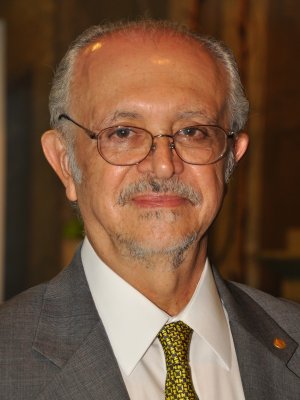
I certainly want to continue trying to understand how the global environment functions. The earth as a system is a very complicated one. And to understand it, we need very many disciplines, very many different scientists working together. I want to continue working with my specialty, which is chemistry, with the atmosphere. There is still much to learn about chemical reactions that occur out there in the air, in the atmosphere. So one of my projects now is to really learn more about this pollution that occurs in cities and that is spreading more through the globe. To learn it in enough detail so we can better tackle it, we can better come up with new ways of using energy, for example, that are not so damaging to the environment.

Academy of Achievement interview, Sun Valley, Idaho, 29 June 1996 source ↗

Others on this question

View all 11 →
Rosa Parks Civil-rights activist
We still have a long way to go, we still have many obstacles and many challenges to face. It’s far from perfect, and it may never be, but I think as long as we do the best we can to improve conditions, then people will be benefited.
Recorded Academy of Achievement interview source ↗
Edmund Hillary Mountaineer and explorer; first ascent of Everest, 1953
I think most of our major challenges are not going to be in the physical field at all. I think they’re going to be in the field of human relations, of getting on with each other, of contributing. People accepting that they have to contribute something, their thoughts, their ideas, maybe even their money, towards producing a world society that is perhaps a little bit more honest and reasonable than it is now.
Recorded Academy of Achievement interview source ↗
Tom Lubbock Art critic
The mystery of summoning up words. Where are they in the mind, in the brain? They appear to be an agency from nowhere. They exist somewhere in our ground or in our air. They come from unknown darkness. From a place we normally don't think about.
Recorded The Observer, from the journals he kept between 2008 and 2010, 7 November 2010 source ↗
Mohamed ElBaradei Director General of the International Atomic Energy Agency, 1997-2009; Nobel Peace Prize 2005
Well, I think the most single important issue today is to make sure that nuclear weapons will not proliferate beyond the eight, or nine, countries that already have nuclear weapons; and absolutely make sure that none of these nuclear weapons or this nuclear material will fall into the hands of any extremist or terrorist group, because if they got hold of this material, they would use it. That would be the beginning of the end for civilisation as we know it.
Recorded Nobel Prize telephone interview, 7 October 2005, 7 October 2005 source ↗

More from Mario Molina

View profile →
Question What is the biggest obstacle you have faced professionally? Craft & work
In terms of this issue of these industrial gases affecting the environment, at the beginning the road was not easy, because we were suggesting that society had to change, that industries had to do something different than they were doing at that time. And of course, initially we did not meet with a good reception to these ideas from industry. And even from the scientific community — even though our ideas were well received in the small group of specialists in what we were doing — it was not necessarily well received by the scientific community at large. So we really had to continue doing as good a science as we could, and at the same time trying to well communicate our conviction that it was something important, something that had to change in the way society was functioning.
Recorded Academy of Achievement interview, Sun Valley, Idaho, 29 June 1996 source ↗
Question What is the part of your job that people would be surprised is most of your job? Craft & work
Although my years at Irvine were very productive, I missed not doing experiments myself because of the many responsibilities associated with a faculty position: teaching courses, supervising graduate students, meetings, etc. After spending seven years at Irvine as Assistant and then Associate Professor, I decided to move to a non-academic position. I joined the Molecular Physics and Chemistry Section at the Jet Propulsion Laboratory in 1982. I had a smaller group – only a few postdoctoral fellows – but I also had the luxury of conducting experiments with my own hands, which I enjoyed very much.
Recorded Laureate-written autobiography, provided by the laureate in November 2007, Nobel Prize Outreach, 1 November 2007 source ↗
Question Which book changed the way you think, and what did it change? Taste & recommendation
It was probably a series of biographies of scientists like Pasteur, or even earlier ones — Leeuwenhoek inventing the microscope and Madame Curie. I forget how many others, but it was really just, for me, a fascination to learn about these great heroes. At that time, of course, they were totally inaccessible, almost non-human, to me. It became very interesting to me.
Recorded Academy of Achievement interview, Sun Valley, Idaho, 29 June 1996 source ↗
Question How has a failure, or apparent failure, set you up for later success? Do you have a favourite failure? Failure & regret
At first the research did not seem to be particularly interesting – I carried out a systematic search for processes that might destroy the CFCs in the lower atmosphere, but nothing appeared to affect them. We knew, however, that they would eventually drift to sufficiently high altitudes to be destroyed by solar radiation. The question was not only what destroys them, but more importantly, what the consequences are.
Recorded Laureate-written autobiography, provided by the laureate in November 2007, Nobel Prize Outreach, 1 November 2007 source ↗
Question Which teacher, parent, coach or friend most made you who you are, and what did you learn from them? Relationships
I had a number of very good teachers in high school, in fact. Some mathematics teachers that perhaps allowed me the freedom to go beyond the normal routine of the class and to explore some more advanced areas. The same thing happened in college. I was able to communicate with a few of my teachers and professors, and go beyond the normal expectations. And then, as I mentioned before, Professor Pimentel, my mentor for graduate studies, was really influential in terms of the influence that he had for me.
Recorded Academy of Achievement interview, Sun Valley, Idaho, 29 June 1996 source ↗

More on craft & work

Also answered this

Jocelyn Bell Burnell, Christiane Nüsslein-Volhard, Shinya Yamanaka, Edmund Hillary, John Lewis, Mohamed ElBaradei

Search the directory for somebody in particular.

Explore further

Report this answer