The question

What makes you want to keep learning?

Originally asked

Vox, to writers and thinkers, 9 Questions, 2017

This exact prompt is one of Vox's nine recurring questions about intellectual habits.

You answer as yourself. Nobody on FLAPSS answers as anybody else.

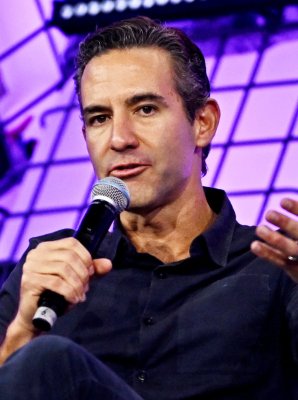
David Vélez

Co-founder and chief executive of Nubank

Recorded said elsewhere, not written here
I wish I knew more about Clojure, which is the programming language we use most at Nubank. If I did, I could better understand some of the more complex problems we're trying to solve, and I think I could ask better questions when we're setting priorities. I'd like to be able to communicate at that level with the technical side of our team, and I think they would appreciate it, too.

questionnaire, Sequoia Capital, 15 August 2018 source ↗

Others on this question

View all 9 →
Mario Molina Atmospheric chemist; Nobel laureate in Chemistry, 1995
I have also benefited from teaching; as I try to explain my views to students with critical and open minds, I find myself continually being challenged to go back and rethink ideas. I now see teaching and research as complementary, mutually reinforcing activities.
Recorded Laureate-written autobiography, provided by the laureate in November 2007, Nobel Prize Outreach, 1 November 2007 source ↗
Christiane Nüsslein-Volhard Developmental biologist; Nobel laureate in Physiology or Medicine, 1995
I think a very big curiosity. I’m very curious and I like to understand things and not only science but also other things where I just try to find out why things work or how things work. Science and nature caught my attention as a small child already. I was growing up in a city but we had a garden and I loved the garden and then often on vacation I was at a farm and I loved these animals and plants and so on, so I was attracted very early on and then we had a very good teaching actually at my … I don’t know whether my teachers really had much of a role because I was determined very early, but then I also did music and I did languages and Literature and so on. I have broad interests actually other than science, but this is really true, this curiosity.
Recorded Marika Griehsel, Interview at the 53rd Lindau Nobel Laureate Meeting, 30 June–4 July 2003, Nobel Prize Outreach, 1 July 2003 source ↗
John Lewis U.S. Representative from Georgia, 1987–2020; Chairman of the Student Nonviolent Coordinating Committee 1963–1966
I wanted to know. I asked a lot of questions and she would say, "Read, read."…So she inspired me a great deal.
Recorded Julian Bond, Explorations in Black Leadership interview, Explorations in Black Leadership, University of Virginia source ↗
Richard Feynman Theoretical physicist; Nobel laureate in Physics, 1965
The questions of the students are often the source of new research.  They often ask profound questions that I’ve thought about at times and then given up on, so to speak, for a while.  It wouldn’t do me any harm to think about them again and see if I can go any further now.  The students may not be able to see the thing I want to answer, or the subtleties I want to think about, but they remind me of a problem by asking questions in the neighborhood of that problem.  It’s not so easy to remind yourself of these things.
Recorded Excerpt from “Surely You’re Joking, Mr. Feynman”, Engineering and Science / Caltech Magazine, 1985 source ↗

More from David Vélez

View profile →
Question When you feel overwhelmed or unfocused, what do you do? Daily life
Now I try to protect one hour in the morning and one in the afternoon where I turn off Slack, and I don't check email. I might read, or write in a journal, or just go for a walk. It's become one of the most important parts of my day. It's when I'm most creative, and when I hit on ideas that can take the company in new directions.
Recorded questionnaire, Sequoia Capital, 15 August 2018 source ↗
Question Who alive today do you admire most, and what draws you to them? Values & belief
Vicky, qué pregunta más difícil (risas). Voy a hablarle de los casos que nos han inspirado, como Charles Feeney, cofundador de los Duty Free Shop en los aeropuertos. Él hizo eso en los años ochenta. Se volvió uno de los hombres más ricos del mundo cuando vendió su compañía e inmediatamente se dedicó a la filantropía y gastó todo su dinero en metas sociales.
Recorded Vicky Dávila, interview, Semana, 1 October 2022 source ↗

More on attention & the world

Also answered this

Steve Jobs, Christiane Nüsslein-Volhard, Desmond Tutu, Mario Molina, Shinya Yamanaka, Richard Feynman

Search the directory for somebody in particular.

Explore further

Report this answer