Charlie and I decided long ago that in an investment lifetime it's just too hard to make hundreds of smart decisions. That judgment became ever more compelling as Berkshire's capital mushroomed and the universe of investments that could significantly affect our results shrank dramatically. Therefore, we adopted a strategy that required our being smart - and not too smart at that - only a very few times. Indeed, we'll now settle for one good idea a year. (Charlie says it's my turn.)
What are you unwilling to optimise?
Question
What inspires you to learn?
Attention & the world
Question
What did you want to be when you were growing up?
Identity & self
Question
What is the book you have given most as a gift, and why?
Taste & recommendation
Question
What is the worst advice you received that you followed anyway?
Failure & regret
Question
What scares you about getting older?
Time & hindsight
Question
What are you most proud of?
Identity & self
It’s easy to try to exaggerate the problems just to get more attention. So for me, it was very clear that the best way to deal with that was to do the best science that I was capable of doing.
Academy of Achievement interview, Sun Valley, Idaho, 29 June 1996 source ↗
Others on this question
View all 30 →
Warren Buffett
Chairman and chief executive of Berkshire Hathaway, 1970–2025
Recorded
His letter to Berkshire Hathaway shareholders in the 1993 annual report, Berkshire Hathaway Inc., February 1994
source ↗
Adam Zagajewski
Poet and essayist
Well, that’s the optimistic reading of it, which you are never able to apply when it happens. You can read it this way when it’s over. Rationally speaking, it’s a period that’s needed, because the danger for every poet, I think, is to write too much. So these are the blessed moments of silence, protecting you from writing too many poems, diluting you and what you have to say in a stream of banal poems. It’s necessary, but still very painful, because I just don’t know what to do if I don’t write poems. I still survive, but it is painful.
Recorded
Brian Barker and Todd Samuelson, AGNI Online (Boston University), 25 April 2003
source ↗
Charlie Munger
Vice chairman of Berkshire Hathaway, 1978–2023
The highest form that civilization can reach is a seamless web of deserved trust. Not much procedure, just totally reliable people correctly trusting one another. That's the way an operating room works at the Mayo Clinic. If a bunch of lawyers were to introduce a lot of process, the patients would all die. So never forget, when you're a lawyer, that you may be rewarded for selling this stuff, but you don't have to buy it. In your own life, what you want is a seamless web of deserved trust. And if your proposed marriage contract has forty-seven pages, my suggestion is you not enter.
Reinhold Messner
Mountaineer; first to climb all fourteen eight-thousand-metre peaks
But I am not looking to any accounts, and I’m not interested at all how many money I have in the bank, what is costing this or that. I’m only trying to realize my ideas.
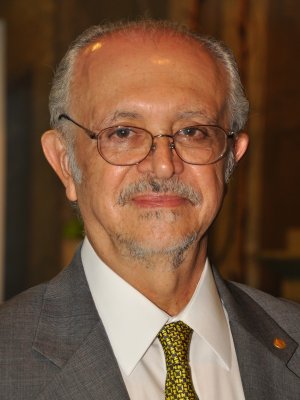
More from Mario Molina
View profile →I have also benefited from teaching; as I try to explain my views to students with critical and open minds, I find myself continually being challenged to go back and rethink ideas. I now see teaching and research as complementary, mutually reinforcing activities.
Recorded
Laureate-written autobiography, provided by the laureate in November 2007, Nobel Prize Outreach, 1 November 2007
source ↗
For me, it was just a thrill. I just remember thinking at that time, this is the sort of thing I would like to do, if I could. I did not come from a family of scientists. My father was a lawyer, my older brother was a lawyer.
It was probably a series of biographies of scientists like Pasteur, or even earlier ones — Leeuwenhoek inventing the microscope and Madame Curie. I forget how many others, but it was really just, for me, a fascination to learn about these great heroes. At that time, of course, they were totally inaccessible, almost non-human, to me. It became very interesting to me.
Recorded
Academy of Achievement interviewer, Academy of Achievement interview, 1996, 1996
source ↗
I did. As a kid, I liked music. I still like it a lot of course. I used to play the violin. I did contemplate, well, maybe that’s an option. I could become a musician. Somehow my parents got some advice that unless I was willing to spend eight or 10 hours a day just playing the violin that I should just give it up. To me, that was very bad advice because you could of course, get very involved in music without being a musician. Fortunately, even though I gave up eventually playing the violin myself, I never gave up my fondness for music. But if I had a chance again, I would not give it up. I would just do it as a hobby. I think that was just because I did not get the correct advice.
Recorded
Adam Smith, Nobel Prize Talks, recorded April 2014; re-released as Nobel Prize Conversations, Nobel Prize Outreach, 11 April 2014
source ↗
Certainly not. As a young child, I remember just dreaming about the Nobel Prize, but that was just a dream. It’s not something I would have ever thought was possible for me.
Recorded
Academy of Achievement interviewer, Academy of Achievement interview, 1996, 1996
source ↗
proud of recognizing that as a scientist, it was not only important to do research and find new things. I also felt a responsibility to apply them for the benefit of society.
Recorded
C&EN profile interview after the Presidential Medal of Freedom, vol. 91 no. 49, Chemical & Engineering News, 9 December 2013
source ↗
More on values & belief
- Which living person do you most admire, and why? 407 answers
- What is the trait you most deplore in others? 197 answers
- What is something everyone in your world agrees about that you think is wrong? 79 answers
- What have you come to understand about what it means to be human? 14 answers
- What is the most overrated virtue? 10 answers
- What do you need to believe in order to get through the day? 9 answers
Also answered this
Richard Hamming, Oliver Sacks, Anthony Fauci, Christiane Nüsslein-Volhard, Yvon Chouinard, Werner Herzog
Search the directory for somebody in particular.
Explore further
- All values & belief questions
- Explore the archive — by field, age, era, and subject