Whose work makes you jealous?
Recorded Christiane Nüsslein-Volhard said elsewhere, not written here
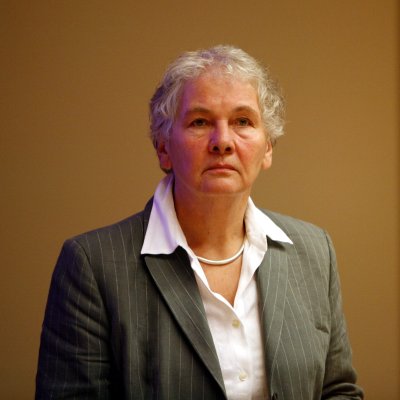
I felt at the time that Eric was much more successful than I, he was extremely productive during his time in Zurich, and worked on many very original projects, germ line, cell lineage, sex determination, where not many people could follow him. I also had the impression that I was dependent on him because he had more fly experience and without him I would not have gotten the job. This made our start in Heidelberg a little difficult, until we sorted things out, and from then on we thoroughly enjoyed working in the same lab.

Laureate-written autobiography for Les Prix Nobel, Nobel Prize Outreach, 1 December 1995 source ↗

Others on this question

View all 9 →
Nick Cave Songwriter, musician and novelist
I’m envious of people who don’t need that. There are people that just wander round the world and ideas fall down from wherever, and they sit and they strum a guitar one day and they write a song, and then they carry on living. I could never work in that way.
Recorded Lauren Laverne, BBC Radio 4, Desert Island Discs source ↗
Jacinda Ardern Prime Minister of New Zealand, 2017–2023; Leader of the Labour Party 2017–2023
Recently I had the privilege of joining ex German Chancellor, Angela Merkel on a panel. I have long been in awe of her leadership, not least for her endurance. She was in power for 16 years. I once asked her how she managed it, her response was "things have changed a lot."
Recorded Tercentenary Theatre, Harvard University, Cambridge, Massachusetts, Harvard Magazine, 26 May 2022 source ↗
Orhan Pamuk Novelist; Nobel laureate in Literature, 2006
Actually I was angry at my father because he had not led a life like mine, because he had never quarrelled with his life, and had spent his life happily laughing with his friends and his loved ones. But part of me knew that I could also say that I was not so much ‘angry’ as ‘jealous’, that the second word was more accurate, and this, too, made me uneasy.
Recorded Swedish Academy, Stockholm, 7 December 2006, The Nobel Foundation (nobelprize.org), 7 December 2006 source ↗
Nassim Nicholas Taleb Author and probability researcher; Distinguished Professor of Risk Engineering at NYU
I say envious of people who are erudite. Like if someone knows Latin very well, I’m envious. If someone knows Sanskrit, I’m envious. And I discovered that early on. So I made money on Wall Street because I wanted to make money on Wall Street, but I didn’t think it was worth the effort.
Recorded Tim Ferriss, The Tim Ferriss Show podcast, 8 September 2023 source ↗

More from Christiane Nüsslein-Volhard

View profile →
Question What inspires you to learn? Attention & the world
I think a very big curiosity. I’m very curious and I like to understand things and not only science but also other things where I just try to find out why things work or how things work. Science and nature caught my attention as a small child already. I was growing up in a city but we had a garden and I loved the garden and then often on vacation I was at a farm and I loved these animals and plants and so on, so I was attracted very early on and then we had a very good teaching actually at my … I don’t know whether my teachers really had much of a role because I was determined very early, but then I also did music and I did languages and Literature and so on. I have broad interests actually other than science, but this is really true, this curiosity.
Recorded Marika Griehsel, Interview at the 53rd Lindau Nobel Laureate Meeting, 30 June–4 July 2003, Nobel Prize Outreach, 1 July 2003 source ↗
Question What is the most important lesson life has taught you? Time & hindsight
Not really. I thought that getting the Nobel Prize was a big interruption in my career, I thought and it was very distracting. It takes a lot of time you know, it just takes time to be honoured, you have to travel and you have to give speeches of things you have, oh it’s so often that you get bored to tears when you hear your own voice. And it’s really taking a lot of your time and there’s no way that during this time you can start something new, I mean you just profit from what you’ve done and there is no time to develop new ideas.
Recorded Marika Griehsel, Interview at the 53rd Lindau Nobel Laureate Meeting, 30 June–4 July 2003, Nobel Prize Outreach, 1 July 2003 source ↗
Question What is your greatest fear? Identity & self
I don’t think it’s misused yet, people are afraid of it might be misused but on the other hand, there is also value in finding out about the relation between several particular predispositions. You might be more careful if you are told that your genetic background is such that you shouldn’t eat fat in large amounts or so, it does help you change your life a little bit and so it’s not so bad, but it’s hard to find out which genetic background is causing these things.
Recorded Marika Griehsel, Interview at the 53rd Lindau Nobel Laureate Meeting, 30 June–4 July 2003, Nobel Prize Outreach, 1 July 2003 source ↗
Question How has a failure, or apparent failure, set you up for later success? Do you have a favourite failure? Failure & regret
As I was lazy and rarely did my homework, I finished high school with a rather mediocre exam. I almost did not pass in English language. Recently, my previous teachers allowed me to see their report on my high school performances, which included the following statements: Despite the fact that her talents are rather equally spread among many areas of knowledge, her performances are rather different depending on the distribution of her interests. Thus, with her strong display of self will she can be decidedly lazy in some topics over years, while in her areas of interests she performs to a degree far extending that required for normal school purposes.
Recorded Laureate-written autobiography for Les Prix Nobel, Nobel Prize Outreach, 1 December 1995 source ↗

More on craft & work

Also answered this

Matthew Walker, Richard Hamming, Nassim Nicholas Taleb, Orhan Pamuk, Nick Cave, Darren Aronofsky

Search the directory for somebody in particular.

Explore further

Report this answer