How has a failure, or apparent failure, set you up for later success? Do you have a favourite failure?
Recorded Mario Molina said elsewhere, not written here
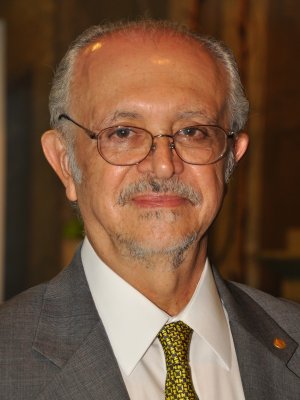
At first the research did not seem to be particularly interesting – I carried out a systematic search for processes that might destroy the CFCs in the lower atmosphere, but nothing appeared to affect them. We knew, however, that they would eventually drift to sufficiently high altitudes to be destroyed by solar radiation. The question was not only what destroys them, but more importantly, what the consequences are.

Laureate-written autobiography, provided by the laureate in November 2007, Nobel Prize Outreach, 1 November 2007 source ↗

Others on this question

View all 69 →
Whitney Wolfe Herd Founder and chief executive of Bumble
Don't be scared of the ‘what ifs,’ because the truth is, the only failure is not trying. That's the only way you can fail. Trying and having it not work out isn't failure.
Recorded CNBC Make It interview, conducted 2019, 11 February 2021 source ↗
Susan Butcher Dog musher; four-time winner of the Iditarod Trail Sled Dog Race
I feel that because I challenge myself so often, sometimes I will fail. This is, to me, the essence of competition — that there will be both winners and losers. But I have great faith in myself that I will turn this loss into something positive.
Recorded Academy of Achievement interview, 29 June 1991 source ↗
Sheryl Sandberg Former chief operating officer of Facebook; founder of LeanIn.org
Day one of my first job out of college, my boss found out that I didn't know how to enter data into Lotus 1-2-3. That's a spreadsheet—ask your parents. His mouth dropped open and he said, ‘I can't believe you got this job without knowing that”—and then walked out of the room. I went home convinced that I was going to be fired. I thought I was terrible at everything… but it turns out I was only terrible at spreadsheets.
Recorded University of California, Berkeley Commencement, Los Angeles Times, 14 May 2016 source ↗
N. R. Narayana Murthy Co-founder and former chairman of Infosys
I will begin with the importance of learning from experience. It is less important, I believe, where you start. It is more important how and what you learn. If the quality of the learning is high, the development gradient is steep, and, given time, you can find yourself in a previously unattainable place. I believe the Infosys story is living proof of this. Learning from experience, however, can be complicated. It can be much more difficult to learn from success than from failure. If we fail, we think carefully about the precise cause. Success can indiscriminately reinforce all our prior actions.
Recorded New York University Stern School of Business pre-commencement lecture, 9 May 2007, Rediff, 28 May 2007 source ↗

More from Mario Molina

View profile →
Question What inspires you to learn? Attention & the world
I have also benefited from teaching; as I try to explain my views to students with critical and open minds, I find myself continually being challenged to go back and rethink ideas. I now see teaching and research as complementary, mutually reinforcing activities.
Recorded Laureate-written autobiography, provided by the laureate in November 2007, Nobel Prize Outreach, 1 November 2007 source ↗
Question Which teacher, parent, coach or friend most made you who you are, and what did you learn from them? Relationships
I had a number of very good teachers in high school, in fact. Some mathematics teachers that perhaps allowed me the freedom to go beyond the normal routine of the class and to explore some more advanced areas. The same thing happened in college. I was able to communicate with a few of my teachers and professors, and go beyond the normal expectations. And then, as I mentioned before, Professor Pimentel, my mentor for graduate studies, was really influential in terms of the influence that he had for me.
Recorded Academy of Achievement interview, Sun Valley, Idaho, 29 June 1996 source ↗
Question What is the biggest obstacle you have faced professionally? Craft & work
In terms of this issue of these industrial gases affecting the environment, at the beginning the road was not easy, because we were suggesting that society had to change, that industries had to do something different than they were doing at that time. And of course, initially we did not meet with a good reception to these ideas from industry. And even from the scientific community — even though our ideas were well received in the small group of specialists in what we were doing — it was not necessarily well received by the scientific community at large. So we really had to continue doing as good a science as we could, and at the same time trying to well communicate our conviction that it was something important, something that had to change in the way society was functioning.
Recorded Academy of Achievement interview, Sun Valley, Idaho, 29 June 1996 source ↗

More on failure & regret

Also answered this

Richard Feynman, Jocelyn Bell Burnell, Frederick Sanger, Norman Borlaug, David MacMillan, Daniel Kahneman

Search the directory for somebody in particular.

Explore further

Report this answer