The question

What is the biggest professional obstacle you have faced?

Originally asked

The American Academy of Achievement, to its honourees, its oral-history interviews

The Academy of Achievement repeatedly asks honorees to identify a major professional obstacle or challenge and describe confronting it.

You answer as yourself. Nobody on FLAPSS answers as anybody else.

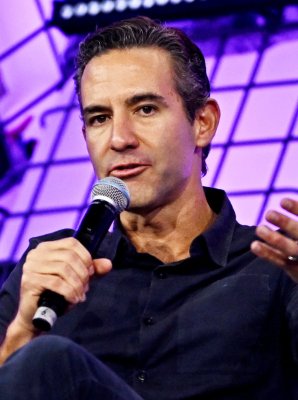
David Vélez

Co-founder and chief executive of Nubank

Recorded said elsewhere, not written here
Sí, empezamos desde cero. Pedimos una licencia de financiamiento comercial, pero es difícil comenzar porque la banca se basa en confianza, regulación y escala. Hay barreras regulatorias que dificultan la entrada de nuevos jugadores. Es un sector históricamente cerrado, que favorece a los incumbentes. Aun así, logramos construir una marca fuerte y generar confianza en los consumidores.

Alejandra Rico Muñoz, interview, La República, 25 March 2026 source ↗

Others on this question

View all 24 →
Clive James Critic, essayist, poet and broadcaster
What I’ve got doesn’t hurt. I’ve been lucky. The treatment has been benign. I don’t know if I could concentrate if I was in pain. I’ve never had to stop.
Recorded Robert McCrum, Interview at James's home in Cambridge, published in the Observer New Review, The Observer, 15 March 2015 source ↗
John Clauser Experimental physicist; Nobel laureate in Physics, 2022
The hard part was getting around this, this was a religion among physicists, and in fact even in the Bohr-Einstein debates, and with Schrödinger also, the universal religion was quantum mechanics makes correct predictions, period, no, off the table. What Bell's theorem and in particular our version of it, the Clauser-Horne-Shimony-Holt experimental prediction, showed that either that had to be wrong, nor Einstein's whole legacy had to be wrong. I think at the time people who were critical of doing the experiment didn't realise really what was at stake, that it was that cut and dried between two religious icons, if you will, the field of physics. Since I kind of was the inventor of the CHSH inequality and the CH inequality and all that, I knew exactly what it was all about. But it took a long time for that to filter in.
Recorded Nobel Prize Outreach, Nobel Week interview, Stockholm, 6 December 2022, Nobel Prize Outreach, 6 December 2022 source ↗
I realized that the biggest obstacle was my mind. It was the biggest obstacle, and if I could get out of the way of myself, I would grow. So every time I had that attitude, I changed it, and I’d say, “You can. Today you can, and take it one day at a time, and today, I’m going to get up and I’m not going to think about the other six days of this week. I’m going to get up right now, and I’m going to go to the gym, and I’m going to learn about my boxing, and I’m going to be in the moment.” You know, in anything, you hit a wall, and then you have to break through it, and I just had to get out of my own way.
Recorded Academy of Achievement, Academy of Achievement interview, Los Angeles, California, 1 April 2006 source ↗
John M. Martinis Physicist; Nobel laureate in Physics, 2025
I would say there are many challenges, and that's kind of what's hard about it. And my particular thesis, since leaving Google and doing my own company, is that building a quantum computer is a little bit harder than the scientists think about because of the system engineering. Building a powerful computer is hard. So what we're particularly working on is the manufacturing of qubits and doing that much better than what people are doing right now. I really enjoyed being in academia, and even at Google working on that. But I really enjoy right now trying to think very practically about what we have to do to get this to work. And what kind of people we have to collaborate with in order to put all the pieces together and build a quantum computer in a cost effective, economic way that makes business sense.
Recorded Adam Smith, Telephone interview recorded shortly after the prize announcement, October 2025, Nobel Prize Outreach, 1 October 2025 source ↗

More from David Vélez

View profile →
Question When you feel overwhelmed or unfocused, what do you do? Daily life
Now I try to protect one hour in the morning and one in the afternoon where I turn off Slack, and I don't check email. I might read, or write in a journal, or just go for a walk. It's become one of the most important parts of my day. It's when I'm most creative, and when I hit on ideas that can take the company in new directions.
Recorded questionnaire, Sequoia Capital, 15 August 2018 source ↗
Question How would you want people to remember you? Death & what remains
Me gustaría que la gente se viera empoderada a construir, a resolver problemas. Que salgamos muchas veces de esa visión de víctimas en la que dependemos de muchas fuerzas. Que veamos problemas como grandes oportunidades para ayudar a resolver. Por ejemplo, frente a esa mala experiencia con los bancos, como me pasó en Brasil, mucha gente se hubiera sentado y quejado del banco. Pero vi una oportunidad gigantesca de ir y competir contra él.
Recorded Vicky Dávila, interview, Semana, 1 October 2022 source ↗
Question What does everyone in your world seem to agree on that you think is wrong? Values & belief
I always say the Nubank story was very unlikely. It was a very low probability event. Again. We were going after these very big incumbent banks. Everybody told me, you know, you're Colombian. You have no idea what you're doing in Brazil. They're going to crush you. Like, don't. Just don't do it. And I did it mostly because everybody told me I couldn't do it. And so, if somebody tells me I can't do something, I want to go do it.
Recorded John Waldron, Goldman Sachs Talks, Goldman Sachs (official event transcript) source ↗
Question What makes you want to keep learning? Attention & the world
I wish I knew more about Clojure, which is the programming language we use most at Nubank. If I did, I could better understand some of the more complex problems we're trying to solve, and I think I could ask better questions when we're setting priorities. I'd like to be able to communicate at that level with the technical side of our team, and I think they would appreciate it, too.
Recorded questionnaire, Sequoia Capital, 15 August 2018 source ↗

More on craft & work

Also answered this

Steve Jobs, Sundar Pichai, Katalin Karikó, Jocelyn Bell Burnell, Christopher Hitchens, Richard Feynman

Search the directory for somebody in particular.

Explore further

Report this answer